




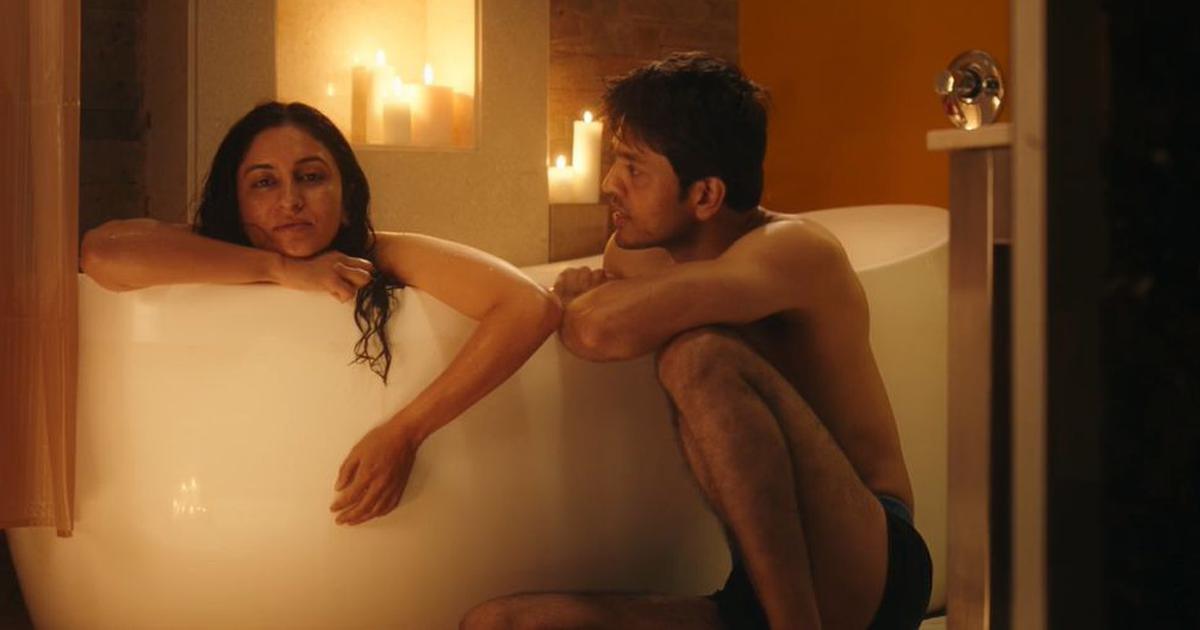
Toh Ti Ani Fuji (He, She and Fuji) has been warmly received since its release on April 10 on Sony LIV. Mohit Takalkar’s Marathi drama, written by Irawati Karnik, explores a turbulent relationship between an unnamed man and woman. Despite being madly in love and sexually compatible, they drift apart due to simmering insecurities and divergent expectations. Years later, they meet again in Japan, where they reassess their time together.
The engrossing film stars Lalit Prabhakar and Mrinmayee Godbole, who previously played a couple in the romantic comedy Chi Va Sau Ka (2017). Prabhakar is one of Marathi cinema’s leading men, most recently seen in Super Duperr and up next in the biopic Dhasal, about the Dalit poet Namdeo Dhasal. Godbole has been in Marathi and Hindi films and shows, notably CRD, Jhimma and Farzi.
Prabhakar and Godbole are terrific in Toh Ti Ani Fuji, perfectly matched as mismatched lovers. Huge demands are made of the actors and fulfilled, whether it’s in the romantic moments or the emotionally bruising scenes. In a pivotal sequence that runs for nearly 13 minutes, the man and the woman attack each other emotionally and physically with a rawness that is harrowing as well as mesmerising.
Besides cinema, Mohit Takalkar has worked extensively in theatre. For Toh Ti Ani Fuji, he ably created the conditions that allowed Prabhakar and Godbole to uninhibitedly immerse themselves in the nuances of Irawati Karnik’s screenplay, they told Scroll. Because of the clarity with which Takalkar shaped their performances, many scenes didn’t require more than a couple of takes, the actors added.
Lalit Prabhakar and Mrinmayee Godbole revisited the making of Toh Ti Ani Fuji and broke down That Break-Up Scene. Here are edited excerpts.
What pointers did Mohit Takalkar give you about your characters?
Lalit Prabhakar: We did a table read, but we didn’t have a script for the portions set in India. We would land up on the sets, get the scenes for the day and then perform them. Mohit didn’t let us prepare, in a sense. This let me surrender myself, be ready for however the character would progress.
Mrinmayee Godbole: Mohit had given us homework as actors to write down incidents in our lives where we strongly felt love or hatred, as well as the high points of past relationships. I had my points, Lalit had his, some came from Irawati and some from Mohit.
Irawati put them all together in a way that they didn’t feel personal anymore. This preparation came handy during the shoot.
Mohit had us responding as spontaneously as possible. It was a really interesting experiment. It brought about an unsettled energy, which served the situations. Not knowing what to expect helped for sure.
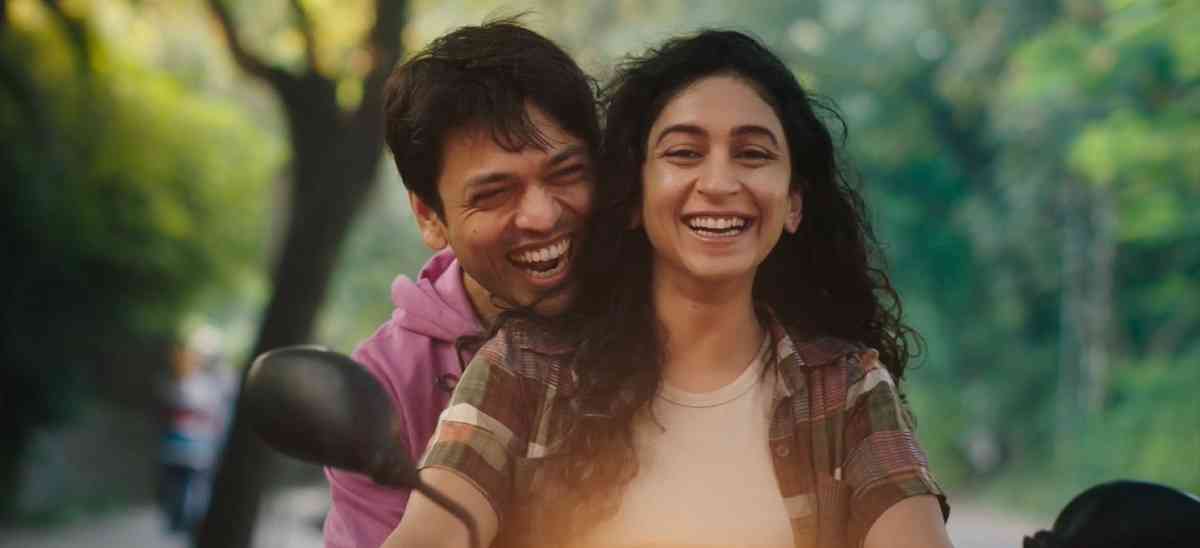
Without a script, you may get a scene where you’re at a restaurant but you don’t know whether it’s going to be a happy date or you end up throwing noodles at each other.
Mrinmayee Godbole: In India, the characters are chaotic, spontaneous, not thinking things through. That really worked for our performances.
I had done a two-step preparation. One was to have the emotions handy and rely on the craft. The other was to be detached from the scenes because they were quite intense. I didn’t want to take anything back home with me.
We didn’t need to improvise the dialogue too much because of the way Irawati had written it. I often thought, this is exactly what I would have said. Mohit had given us the liberty to move around, speak in whatever pitch we felt fit the moment. It was interesting to be put in a box and then left free to do whatever you could within it.
Lalit Prabhakar: It was intense, but I loved it too. I have a reason for choosing every project that I do. In this case, it was Mohit and Irawati.
I have worked with both of them before. Irawati had written my films Anandi Gopal and Smile Please. She is a brilliant writer, and she has a huge range too.
As for Mohit, it’s liberating to work with him. When you work with someone like him, you learn a lot but also unlearn a lot too. You gain a different perspective.
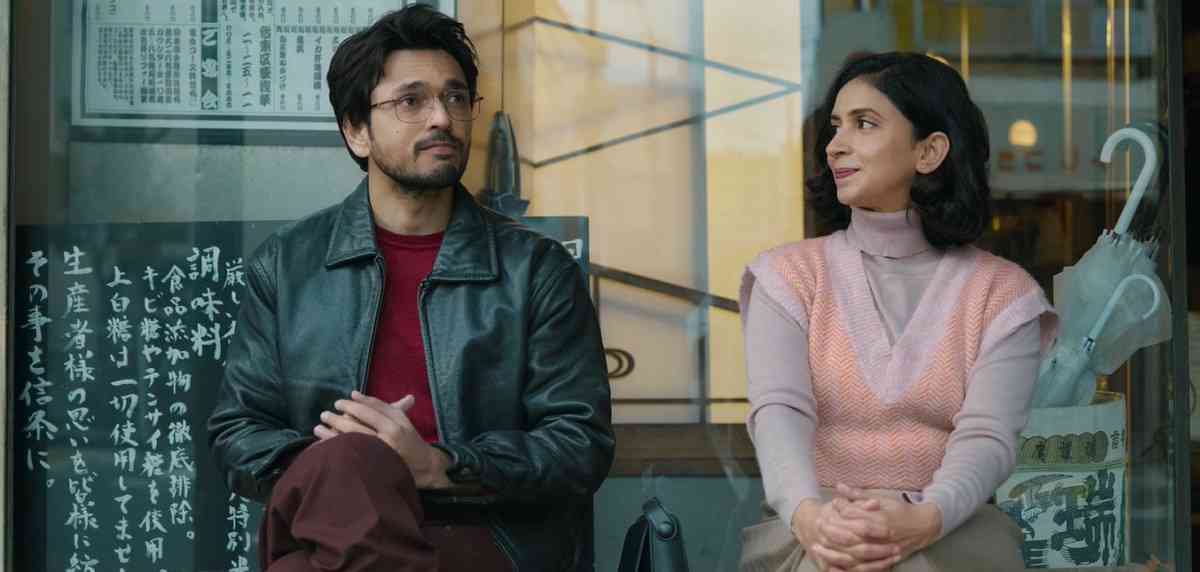
The scenes in Japan have an entirely different mood. The characters are older and calmer. They have distance from their past and the ability to look back on what they endured together.
Mrinmayee Godbole: For Japan, we had a script. Since we had our scenes beforehand, we almost didn’t know what to do because we were used to going in without knowing much. But the process did bring about a sense of calmness.
I had been practising my Japanese well before going to Japan. In fact, I missed Japanese so much after the shoot that I have continued to study the language. I have started teaching Japanese. That’s a performance that I may not be able to bring to viewers, but I do have an audience every evening when I teach.
Lalit Prabhakar: The Japan portions were lovely to shoot because they were completely different mood-wise. The culture and the environment also contributed many aspects to the story.
Neither character has a name. Was that an advantage or a handicap? Did you have a name for your character in your head?
Mrinmayee Godbole: We didn’t want to pin down the characters to any one identity. I did try to think of a name for her in my head, but I could never come up with anything.
It was tough at times, especially in the fighting scenes. I tend to take the person’s name when I have something rude or aggressive to say. That’s the only time we missed having each other’s names.
Other than that, it gave us the liberty to do certain things that sometime in theory might seem unthinkable. Not having a sense of identity let us loose in that space and be different people at different points.
I realised the impact only after watching the film. Everyone was wondering who was right and who was wrong. Not having the names, not being able to take a side, added to this ambiguity.
Lalit Prabhakar: The question of whether the character had a name or not didn’t matter to me. If I had named the character, I would have limited him.
I developed my character’s dynamic based on the script. My understanding was that he is very honest. He doesn’t hold back, nor does he pretend. He’s grown up in comfort, so he’s unaware of practicalities. He isn’t close to his family, so he is completely dependent on his partner. He has friction with his father, so he wants to prove himself.
He’s a man-child, but he’s very pure. And he is in love with her, all the time. Take the bungee jumping scene – he is all in. His emotional graph may provoke ridicule or anger, but it helped me play around.
There’s a lot of sexual frankness too – unusual for Marathi cinema.
Mrinmayee Godbole: Yes, this doesn’t happen that often in Marathi films for whatever reason. This might be one of those films that dared.
It made no sense to show everything in the lives of these two people and then conceal this integral part, which is almost like an escape towards the end of their relationship.
Lalit Prabhakar: The film explores every emotion. There is nothing apologetic about anything, even the ugliness. The film is very true to the script, there is no concealment. This gives an actor great freedom – I can fight, I can feel bad, I can go to extremes.
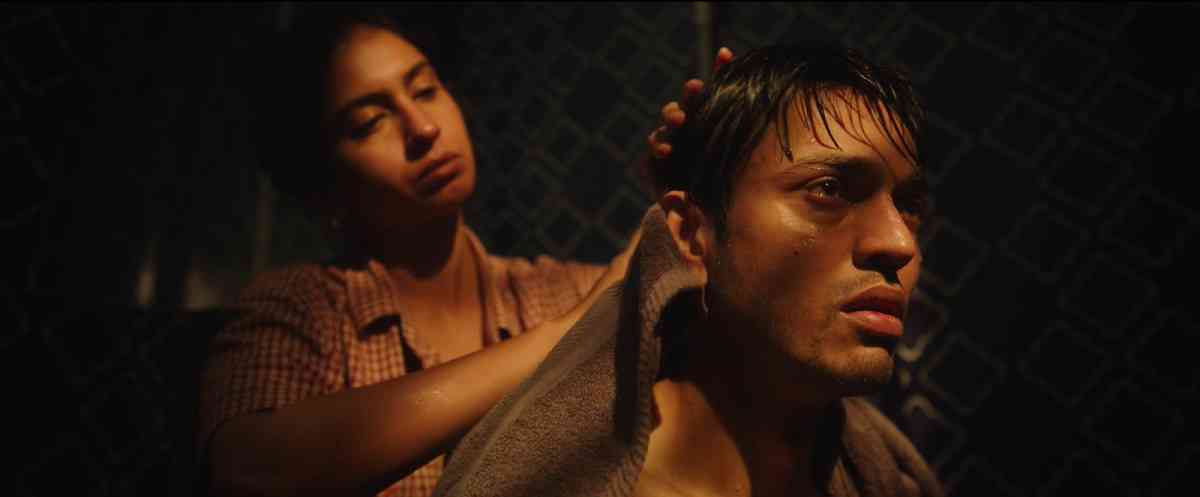
The break-up sequence is hard to watch. How hard was it to shoot?
Mrinmayee Godbole: This is actually the one scene that was rehearsed. My character had a lot to hold on to and communicate without saying it in words.
The shoot had led up to this moment. As characters, we were full of anger and aggression and hatred.
By this point, we had been shooting for a while. We had been getting used to the space and making it ours. There were certain things that we were trying to do to make the house look like our own. Such as, when I enter the house, I hang up my bag and keys without looking at the hooks.
We had one night, that too not even the entire night. We knew we didn’t have too many takes. Everyone was prepared.
We got it in two takes. It was like ripping off a Band-Aid. It was a mixture of adrenaline and a bit of fun, to be honest, because I think I am way more sensible in real life.
We were shooting in a real location. By the time the second take was over, babies had started crying, dogs had started barking and neighbours had started yelling. You can even hear some of it in the background. People told us, we don’t know what you are doing in there, but this can’t be a film shoot.
After the scene, I had a good night’s sleep. The scene that actually shook me up was the one in which he barges into the cafe and tells her, this isn’t working out. Somehow, that hit me while performing way more.
Lalit Prabhakar: I loved the scene. It was the result of a great collaboration.
It was tough to choreograph, shoot and perform. There were so many emotions in it – rage at himself and towards her, helplessness. It’s unpredictable too. You have no idea where the scene is headed.
We did a dry run to mark our spots and were then told by Mohit to feel free to do whatever we wanted. He just gave us a few pointers.
I like to explore my physical surroundings while performing. Can I use a sofa or a wall that may not be in the script? Actors like Charlie Chaplin and Kamal Haasan use their bodies and surroundings brilliantly. Everything comes alive around them.
The sequence was exhausting, but I have the ability to switch off. Craft and awareness are important, but I can come out of scenes soon enough. I was cracking jokes after this scene was over, even if that sounds creepy.
Also read:
‘Toh Ti Ani Fuji’ review: Come for the reunion and stay for the despair
